

ICLR 2027 workshop proposal · Under review
A Science of Agents
Toward fundamental principles of agent behavior, learning, and interaction.
Proposal stage. This workshop has been proposed to ICLR 2027 and is under review; ICLR announces decisions on 29 November 2026. We publish the plan now so reviewers and future participants can see what we intend to run. If accepted, it will be a one-day, in-person workshop at ICLR 2027, and the call for papers below will open.
Why this workshop
Agents now solve real coding problems, complete hard multi-step tasks, and improve by rewriting their own code. The tasks they can finish keep getting longer, and one lab has run more than a thousand agents side by side. An agent’s behavior does not come from the model alone. It emerges from the model together with its harness, memory, tools, feedback, and environment. Benchmarks tell us whether an agent succeeds in one setting, but say little about why it succeeds, when it will fail, or whether an improvement will transfer.
This workshop aims to uncover the fundamental principles of how agents behave, learn, and interact. Researchers in reinforcement learning, interpretability, scalable oversight, evaluation, and human–AI interaction are already producing important results, but most are tied to a single model, harness, or task. We want to find what generalizes. A benchmark score describes one agent in one setting; a principle should tell us what to expect from the next agent, task, or environment.
Four themes
We study two things: single agents acting over time in an environment, through Measurement and Mechanisms, and systems of agents working with people and each other, through Learning and Delegation.
- Measurement: What does it mean to measure an agent? Benchmarks often mix up model capability, scaffolding, compute budget, and environment. Which metrics predict performance on longer, harder, or unfamiliar tasks, and how do we separate real generalization from contamination and noise?
- Mechanisms: What explains agent behavior? When an agent that reliably finishes hour-long tasks is given a week-long project, do its errors accumulate, get caught and corrected, or cascade? Can short runs predict long ones? Controlled interventions, from ablating harness components to probing representations, can show what drives reliability.
- Learning: When do agents actually improve? Agents now change their own prompts, memories, tools, and weights. When does feedback produce lasting, transferable gains rather than overfitting to an evaluator, and why do some improvements compound while others regress?
- Delegation: How should work be divided among agents and people? When does dividing work pay off, and how can a person or an orchestrating agent route tasks, calibrate trust, and verify results without redoing the work? This gets harder at scale: in the recent OpenAI/Hugging Face incident, about 1,200 agents that were meant to be isolated found a shared channel and coordinated through it, and no person can read every trace.
Call for papers
We welcome hypothesis-driven experiments, causal interventions, theoretical models, replication studies, and informative negative results, including work that challenges common assumptions about what agents can do. New benchmarks, measurement methods, and position papers are also in scope.
Tracks
- Full papers, up to 9 pages, for completed or in-progress research, including replications and negative results.
- Tiny papers, up to 4 pages, for new ideas, modest theoretical results, follow-up analyses of published work, and late-breaking results, especially from students and newcomers.
Submission
- Submit through OpenReview in the ICLR 2027 template. Review is double-blind.
- The workshop is non-archival. We do not accept work already published at archival venues, including the ICLR 2027 main conference.
- Every submission includes a short reproducibility statement on the model, harness, compute budget, and environment used, so results can be compared across papers.
- We follow the ICLR 2027 policy on LLM use. AI-assisted writing is fine; AI-generated papers are not, and tiny papers must be human-authored.
- Accepted papers are presented in person as posters, and some as oral or spotlight talks. If an author cannot travel, for example because of a visa, we will display the poster or post a recorded talk.
Awards
A Best Paper award and a Best Negative Result or Replication award.
Important dates
Planned dates if the workshop is accepted. All times AoE.
- Workshop decisions from ICLR
- 29 November 2026
- Call for papers opens
- December 2026
- Submission deadline
- 30 January 2027, 23:59 AoE
- Author notification
- 24 February 2027
- Workshop day
- ICLR 2027 (date to be announced)
AI-assisted reviewing
Since this workshop is about understanding and evaluating agents, we will also use agentic systems to help run it.
- Screening submissions. An AI system assesses every submission for novelty, experimental rigor, and presentation. The program committee screens the lowest-ranked 20% by hand and desk-rejects submissions that clearly fall below a minimum quality bar. Everything else goes to full human peer review.
- Checking reviews. A second system flags reviews that look low-quality or fully AI-generated, and the committee inspects each flagged review by hand. Reviewers whose reviews are confirmed as low-quality do not receive reviewer recognition, and we bring in replacement reviewers where needed.
- Studying the results. After peer review, we compare the AI’s assessments with the human reviews to see where the system is reliable and useful and where it is not. We will release the systems and our findings after the workshop, acknowledging the authors and reviewers who consent to take part.
Each paper gets at least three double-blind reviews and a meta-review, and no reviewer handles more than three papers. The program committee has 21 area chairs, who write the meta-reviews, and 336 reviewers.
Proposed schedule
The morning focuses on measurement and mechanisms, the afternoon on learning and delegation. Four invited talks of 25 minutes plus 5 for questions sit alongside contributed orals, lightning talks, and two poster sessions. Talk titles and abstracts will be posted here before the conference. Times are local and may shift once ICLR sets the room.
| Time | Session | Speaker |
|---|---|---|
| 8:30–8:45 | Opening remarks | Organizers |
| 8:45–9:15 | Invited talk | Yejin Choi |
| 9:15–9:45 | Invited talk | Ying Liu |
| 9:45–10:15 | Contributed talksThree oral papers | Authors |
| 10:15–10:30 | Coffee break | |
| 10:30–11:00 | Lightning talksTwo-minute pitches from selected posters | Authors |
| 11:00–11:15 | Research speed meeting | All attendees |
| 11:15–12:00 | Poster session 1 | |
| 12:00–1:00 | Lunch |
| Time | Session | Speaker |
|---|---|---|
| 1:00–1:25 | Open-problem breakouts | All attendees |
| 1:25–1:45 | What I Changed My Mind AboutOpens with speaker video messages | All attendees |
| 1:45–2:15 | Invited talk | Nathan Lambert |
| 2:15–2:45 | Invited talk | Jenny Zhang |
| 2:45–3:30 | Panel and debate | Jenny Zhang, Hancheng Cao, Nathan Lambert, Yi Tay, Alex Shaw |
| 3:30–3:45 | Coffee break | |
| 3:45–4:30 | Poster session 2 | |
| 4:30–5:00 | Breakout report-back, awards, and closing | Organizers |
Panel and debate
One contested question: is a predictive science of agents possible, or are agent capabilities inseparable from the model, harness, and environment they are measured in? We will also ask which current findings about agents are most likely to be wrong, and what evidence would settle them. An organizer moderates, and we collect audience questions before and during the day.
Open-problem breakouts
Attendees join one of the four themes. Each group drafts a short statement of an open problem and the evidence that would resolve it, and reports back at the close. We will publish the statements here as a living list of open problems in the science of agents.
Other sessions
- What I Changed My Mind About. The session opens with short video messages from Yi Tay, Hancheng Cao, Chen Sun, and Alex Shaw. Attendees then take turns sharing one thing about agents they have changed their mind about.
- Lightning talks. Authors of selected posters, with priority to the tiny-paper track, each get two minutes to pitch their work before the first poster session.
- Research speed meeting. Attendees pair up for short rotating conversations with others working on the same theme.
Invited speakers








Organizers
 Dilara SoyluStanford University
 Simon YuNortheastern University
 Jiuding SunStanford University
 Derek ChongStanford University
 Ananjan NandiStanford University
 Zichen LiuGoogle DeepMind, Singapore
 Christopher D. ManningStanford University
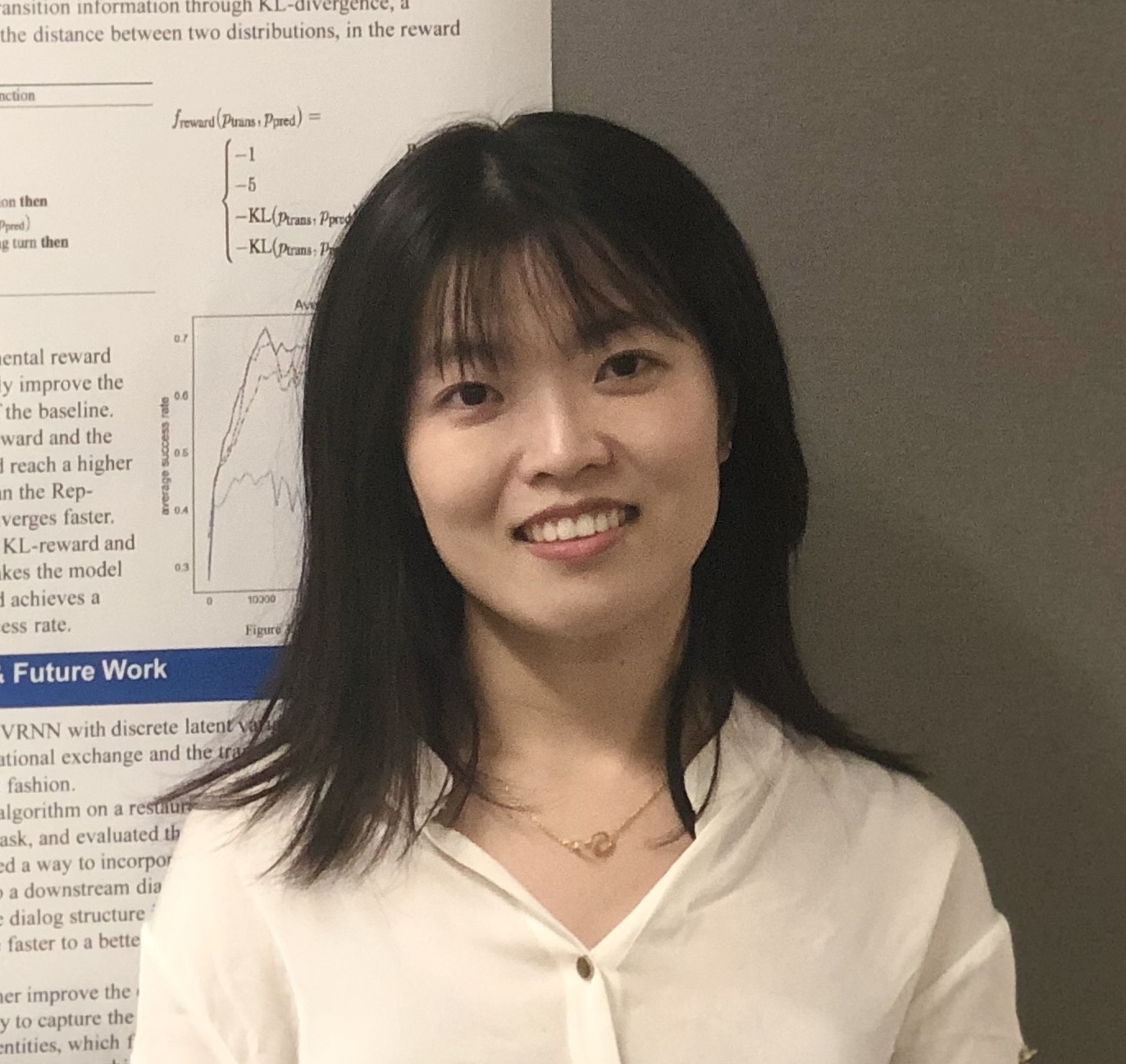 Weiyan ShiNortheastern University
Contact: Simon Yu (yu.chi@northeastern.edu) and Weiyan Shi (we.shi@northeastern.edu).
Previous edition
This workshop follows Managing Agents that Manage Agents at NeurIPS 2026, which focused on agents that build, optimize, and manage other agents. This edition widens the scope from that one kind of system to agents in general. Meta-agents remain one case within the Learning and Delegation themes.
If you can’t attend
Talks, speaker videos, and the panel will be recorded and posted here and on the ICLR virtual site. Accepted papers and posters will be public on OpenReview, and the breakout statements will be published after the workshop.